

Customer Support Has Changed
Not too long ago, customer support was relatively simple.
A customer had a question, sent an email, made a phone call, or walked into a store. Someone responded, the issue was resolved, and the interaction ended.
Today’s businesses operate in a very different environment.
Customers expect support through email, live chat, websites, social media, messaging platforms, and sometimes even self-service portals. They expect quick responses, consistent communication, and visibility into the progress of their requests.
As customer expectations have evolved, managing support through shared inboxes, spreadsheets, and disconnected communication channels has become increasingly difficult.
This is where a customer support ticketing system comes in.
But before discussing when your business needs one, it’s important to understand what a ticketing system actually is and why so many growing businesses eventually adopt one.
What Is a Customer Support Ticketing System?
At its core, a customer support ticketing system is a platform that converts customer requests into structured, trackable records known as tickets.
Every support interaction—whether it originates from email, chat, a website form, social media message, or phone call—is captured and organised within a central system.
Instead of support requests being scattered across multiple inboxes or individual employees, every issue is assigned a unique ticket that can be tracked from creation to resolution.
The ticket becomes a complete record of the interaction, including:
- Customer information
- Communication history
- Assigned agents
- Internal notes
- Status updates
- Resolution details
This creates a single source of truth for customer support activities.
More importantly, it ensures that customer requests do not disappear into busy inboxes or rely solely on the memory of individual employees.
Why Businesses Outgrow Shared Inboxes
For many businesses, support starts with a simple email address such as support@company.com.
In the early stages, this works perfectly well.
The volume of requests is manageable, team members can easily coordinate responses, and customer expectations are relatively straightforward.
Problems begin to emerge as the business grows.
As support requests increase, teams often encounter challenges such as duplicate responses, unanswered emails, inconsistent communication, and a lack of visibility into unresolved issues.
Managers struggle to answer simple questions:
How many support requests are currently open?
Which team members are overloaded?
How quickly are customers receiving responses?
Which issues occur most frequently?
Without structured processes, obtaining reliable answers becomes difficult.
The result is often slower response times, frustrated customers, and increasing operational inefficiencies.

A Ticketing System Is About More Than Managing Tickets
One of the biggest misconceptions about ticketing systems is that they simply organise customer requests.
In reality, they help businesses build repeatable support processes.
Every customer interaction follows a journey.
A request arrives, it is assigned to the appropriate team member, prioritised, investigated, resolved, and eventually closed.
A ticketing system provides structure around this process.
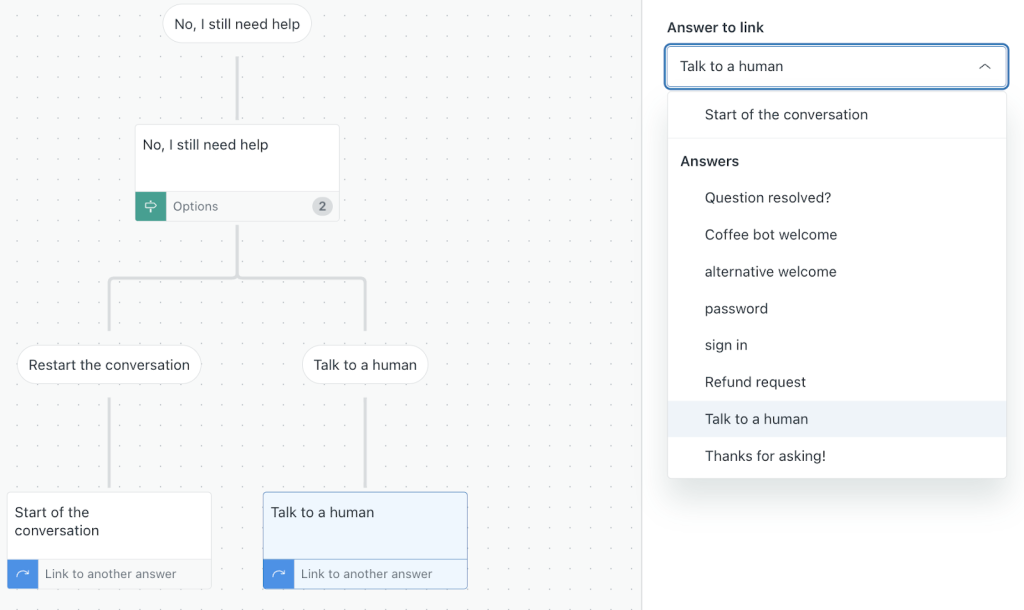
It allows businesses to define workflows, automate repetitive tasks, establish service standards, and ensure consistency across support teams.
This structure becomes increasingly valuable as organisations grow.
Rather than relying on individual employees to remember every task, the system creates accountability and visibility throughout the support process.
When Does a Business Need a Ticketing System?
The answer is not necessarily based on company size.
Some small businesses require a ticketing system very early, while some larger organisations may continue operating without one for longer than they should.
The real question is whether customer support has become difficult to manage effectively.
A ticketing system is often needed when customer requests begin arriving through multiple channels and teams struggle to maintain visibility.
It becomes necessary when support requests are occasionally missed, when customers follow up repeatedly for updates, or when managers cannot accurately measure support performance.
Another common indicator is when customer knowledge starts becoming trapped inside individual employees.
If one team member is unavailable and nobody else can easily access customer history or ongoing issues, the business has become dependent on people rather than systems.
That dependency creates risk.
A ticketing platform helps transfer knowledge from individuals into structured processes that can scale.
The Customer Experience Impact
Customer support is no longer just an operational function.
For many businesses, it has become a key component of customer experience.
A customer may never see your internal systems, but they immediately notice the outcomes.
They notice when they receive timely responses.
They notice when they don’t have to repeat themselves to multiple agents.
They notice when support teams already understand the context of previous conversations.
Most importantly, they notice when issues are resolved efficiently.
A well-implemented ticketing system helps create these experiences consistently.
It allows support teams to focus less on administration and more on helping customers.
The Role of Automation
As support volumes increase, manually managing every task becomes increasingly difficult.
Modern ticketing systems help solve this through automation.
Requests can be automatically categorised, assigned to the correct departments, prioritised based on urgency, and escalated when service targets are at risk.
Automation does not replace human support.
Instead, it removes repetitive administrative work so support teams can spend more time solving customer problems.
When implemented correctly, automation improves both efficiency and customer satisfaction.
When implemented poorly, however, it can create frustration and confusion.
This is one reason why setup and ongoing optimisation are often just as important as the software itself.
Why Implementation Matters More Than Software Selection
Many businesses spend significant time comparing support platforms.
They evaluate features, pricing, integrations, and user interfaces.
While these factors are important, they are often not the biggest determinant of success.
The reality is that most modern ticketing systems are capable platforms.
The bigger challenge is implementation.
How are tickets categorised?
Who receives which requests?
How are escalations handled?
What response targets should be set?
How should reporting be structured?
These decisions have a far greater impact on long-term success than choosing between two similar software solutions.
A poorly configured ticketing system can create as many problems as it solves.
A well-configured system becomes an operational asset that improves efficiency, accountability, and customer experience.
The Hidden Costs of Not Having a Ticketing System
Businesses often focus on the subscription cost of support software.
What is rarely considered is the cost of continuing without one.
These costs can include missed customer requests, slower response times, inconsistent service delivery, duplicated effort, poor reporting, and reduced customer retention.
Unlike software costs, these inefficiencies are difficult to measure directly.
However, they accumulate over time and can have a significant impact on customer satisfaction and business performance.
In many cases, the cost of operating without a structured support system exceeds the cost of implementing one.
Final Thought
A customer support ticketing system is not simply a tool for managing support requests.
It is a framework for delivering consistent customer experiences at scale.
As businesses grow, customer expectations increase, communication channels multiply, and operational complexity expands.
Eventually, managing support through inboxes and manual processes becomes unsustainable.
The question is not whether your business will need structure.
The question is when.
The businesses that recognise this early build support systems that grow alongside them.
The businesses that wait too long often find themselves reacting to customer complaints, operational bottlenecks, and internal inefficiencies that could have been prevented.
A ticketing system is not just about handling customer issues.
It’s about creating a support operation that is organised, measurable, scalable, and capable of delivering the level of service customers expect.
0 Comments